1. Starting Point: Why Traditional Organisation Models Are Reaching Their Limits
Many companies are still organised largely around roles and positions. Job titles define responsibilities, development follows traditional career paths, and talent is often assessed only at certain points in time.
At first glance, this model works. In practice, however, it creates structural challenges: skills remain invisible or are not fully utilised, development is often unspecific and rarely data-driven, and resources are not used efficiently. At the same time, strategic transformation is slowed down while valuable potential within the organisation remains untapped.
In dynamic markets, simply knowing who holds which role is therefore no longer enough. What really matters is understanding who has which skills – and how those skills contribute to business success.
The key question is:
How do we build an organisation that consistently focuses on skills rather than functions?
2. The Target: A Skills-Based Organisation
The answer is the Skills-Based Organisation – not as a theoretical concept, but as a practical model for managing the organisation.
At its core, it is about three things: transparency, steerability, and impact.
Organisations need a clear and reliable view of existing capabilities, individual strengths, and actual performance. Only this level of transparency creates the foundation for developing and deploying talent intentionally – not based on gut feeling, but on objective data.
From there, talent can be managed strategically. Development is no longer based on a one-size-fits-all approach, but on specific requirements and priorities. Decisions around staffing, development, and transformation are made based on data – making them more transparent, targeted, and effective.
The third key aspect is a consistent focus on productivity and impact. The focus shifts towards value-creating activities, existing resources are used more effectively, and skills are directly connected to business outcomes.
The goal is clear:
Not simply having the “right person in the right job”, but creating the optimal combination of skills, deployment, and development – for measurable business impact, sustainable growth, and long-term competitiveness.
3. The Lever: Talent Assessment as an Enabler
The real difference between ambition and reality lies in execution. Many organisations define skills – but far fewer are able to actually measure and manage them.
This is exactly where an integrated Talent Assessment comes in. It creates the foundation for assessing capabilities holistically, making them comparable, and translating the results into concrete decisions.
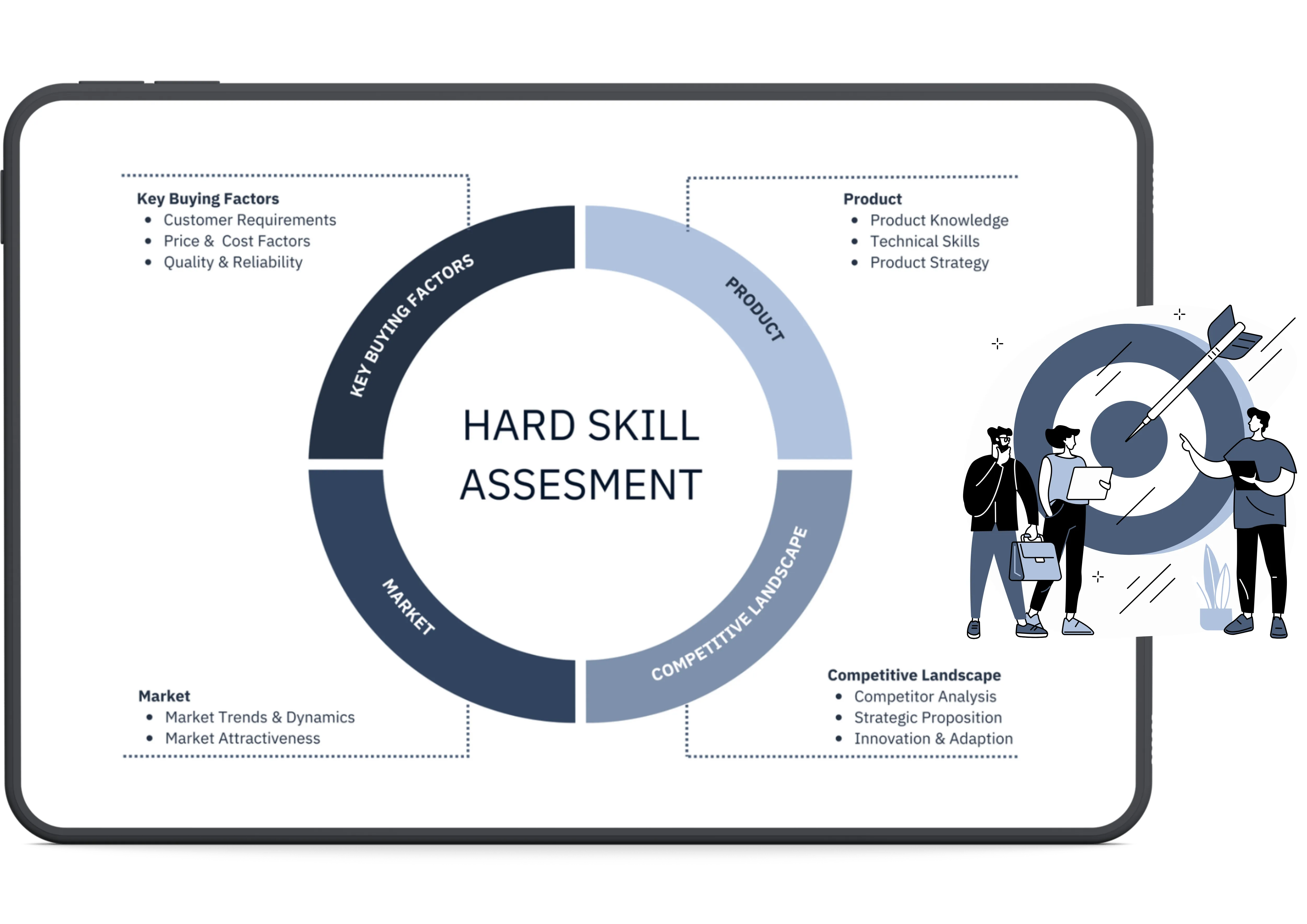
A key component is the systematic assessment of hard skills. Professional capabilities – for example in relation to products, markets, competition, or commercial skills – are evaluated in a structured way. Comparing an individual’s self-assessment with the assessment of their manager creates a differentiated and reliable overall picture. Strengths become visible, while misjudgements can be addressed in a targeted way.
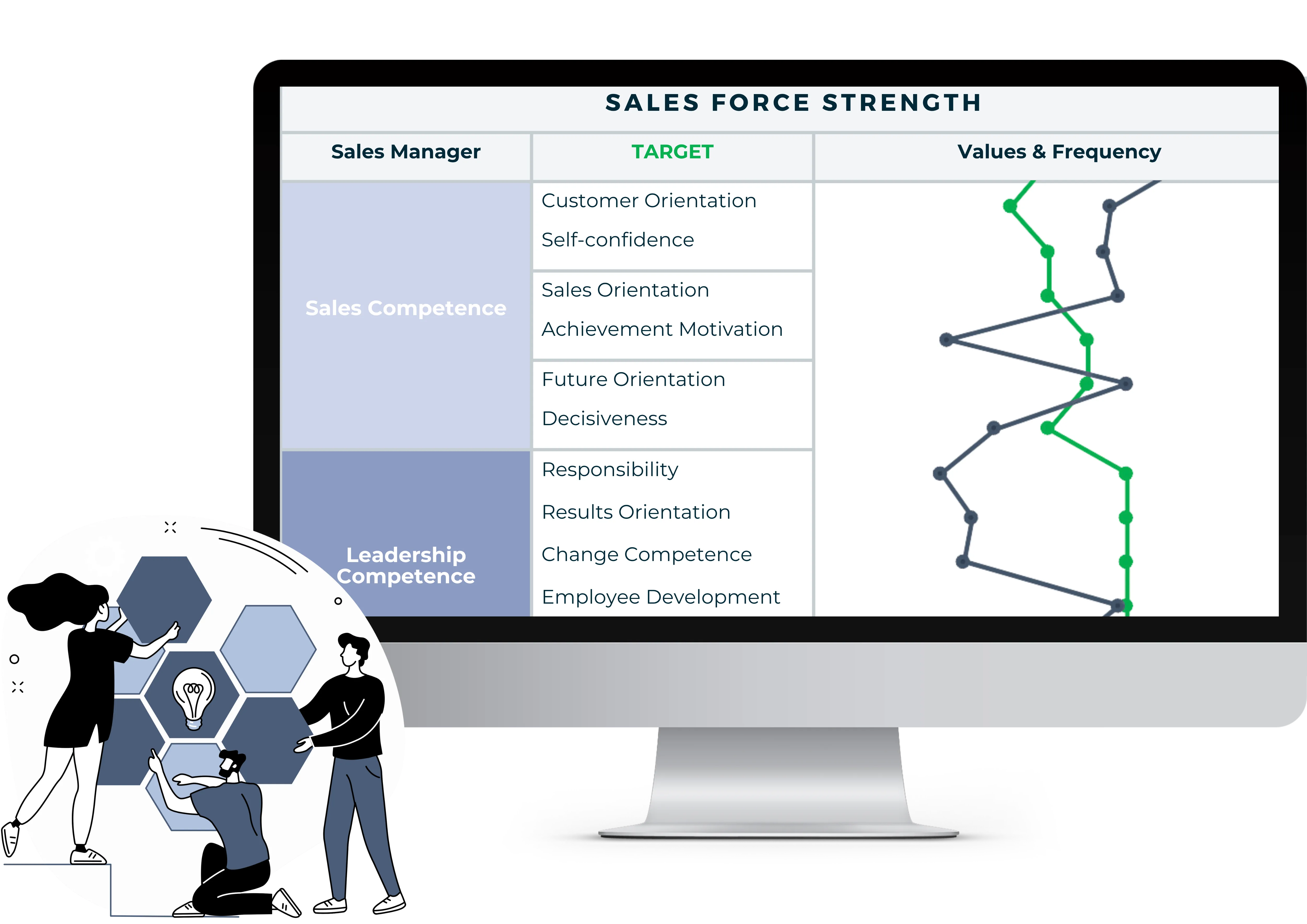
This is complemented by an analysis of soft skills. Through psychometric potential assessment, not only capabilities but also focus, motivation, and behaviours become measurable. It reveals where people stand today, what they are focused on, and which potential remains untapped. At the same time, it creates an organisation-wide view as well as insights into specific target groups – always measured against a clearly defined target profile.
One of the biggest levers, however, lies in analysing how people actually spend their time. In many organisations, performance losses are not caused by a lack of skills, but by using the right skills in the wrong way. Value-creating activities receive too little attention, while structural inefficiencies and operational tasks consume a disproportionate amount of time.
The picture is completed by practical business cases. They show how employees approach real-world challenges, how they make decisions, and how strong their expertise actually is in key areas. This means assessing not only knowledge, but actual effectiveness in a business context.
Only the combination of these four dimensions creates what was previously missing: true transparency around potential and performance.
4. The Process: From Assessment to Strategic Development Management
Talent Assessment is not an isolated tool. It is part of a clearly structured transformation process. At its core is a fundamental shift: away from intuition and isolated initiatives – towards a manageable system for talent and performance.
It starts with diagnosis. All relevant data is collected and brought together into one comprehensive picture. Skill gaps, potential, and inefficiencies become visible – for the first time on a reliable and comparable basis.
Based on these insights, a clear target profile is defined. Which skills will be critical for the future? Where are the gaps between the current and desired state? And which areas require the greatest strategic attention?
During the implementation phase, these insights are translated into concrete actions. Development is targeted towards critical skills, resources are reallocated, and roles and responsibilities are adjusted accordingly.
The real difference, however, comes in the final step: strategic development management. Decisions around talent, promotions, and training investments are made consistently based on data and continuously reviewed. Development becomes measurable – and therefore manageable.
← Back to all posts